
The psychology behind creating a feedback culture

• Organizations are constantly changing, requiring employees to continuously upskill and adapt to new roles and responsibilities.
• Resilience is essential for organizations to navigate change, with feedback playing a crucial role in fostering a healthy feedback culture.
• Lack of engagement and uncertainty in organizational structures can lead to high turnover rates among employees.
• Cultivating a growth mindset and promoting autonomy can help employees thrive in a changing work environment.
• Feedback is a key tool for personal and professional development, and organizations should focus on creating a culture that values feedback asking over feedback giving.
Sven Prevoo, L&D Consultant and Business Development Manager at Lepaya is co-author of this article
There is one thing that organizations all have in common: they are changing constantly. Subsequently, the skills employees need to perform their jobs well are continuously changing with them. What we see is that organizational structures are being challenged. Transforming from classical to flatter structures. Businesses, and their employees with them, need upskilling and new forms of leadership in order to become resilient and to be able to adapt to changing roles, responsibilities and work environment.
Resilience is not something you can tick off the list, it is a prerequisite for any organization to deal with change. It’s an integral part of business. If organizations want to become resilient, feedback can prove a very powerful tool. It can be the start of leading change and upskilling successfully. So how do you create a healthy feedback culture and what is the psychology behind it?
Workforce transformation
Change always signals something new. This can indicate something positive, such as innovative technology making our life easier. But for employees it can also mean uncertainty about their place within a changing organizational structure, or ambiguity towards a new work environment.
“Since the pandemic, employees are leaving the workforce or switching jobs in droves. For many, employers have played a big part in why they’re walking away.” By Kate Morgan (1)
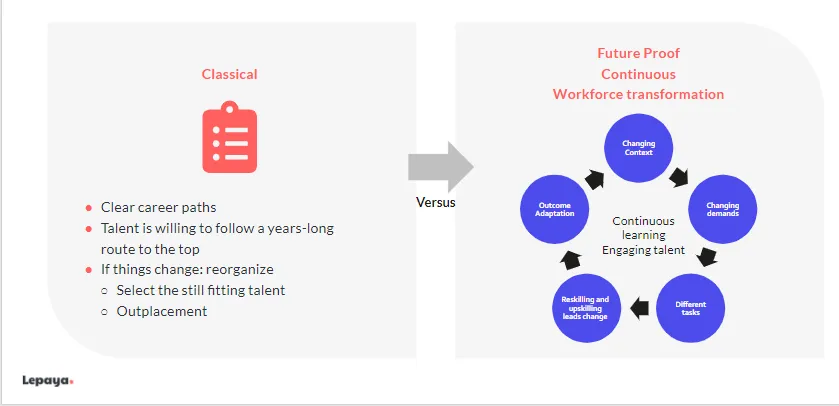
Changes within an organizational structure can come across for employees as volatile, giving them a sense of uncertainty, ultimately resulting in ambiguity and reflecting back in their engagement, or lack of. Hence change, uncertainty and ambiguity can be one of the reasons why your talent will leave an organization.
Lack of engagement & an uncertain culture
Where employees used to have pretty clearly defined career paths, they now often face flatter and more flexible organizational structures. Often changing roles, responsibilities and having to learn new skills.
Within this new way of working, there is a lot of place for talent. But, only when managed properly. When employees are not given a growth perspective, a chance to re- or upskill in order to match to their role, their place within the organization will likely become an ill fit. Employees will not be able to develop and work on their career path, and they will leave as a result of this. Resulting in a low retention rate; a killer for growth.
So how do you make sure your employees are resilient? And that they can thrive within a changing work environment. The answer lies in the psychology of your employees and in how you set up your organizational culture.
What motivates people: mastery
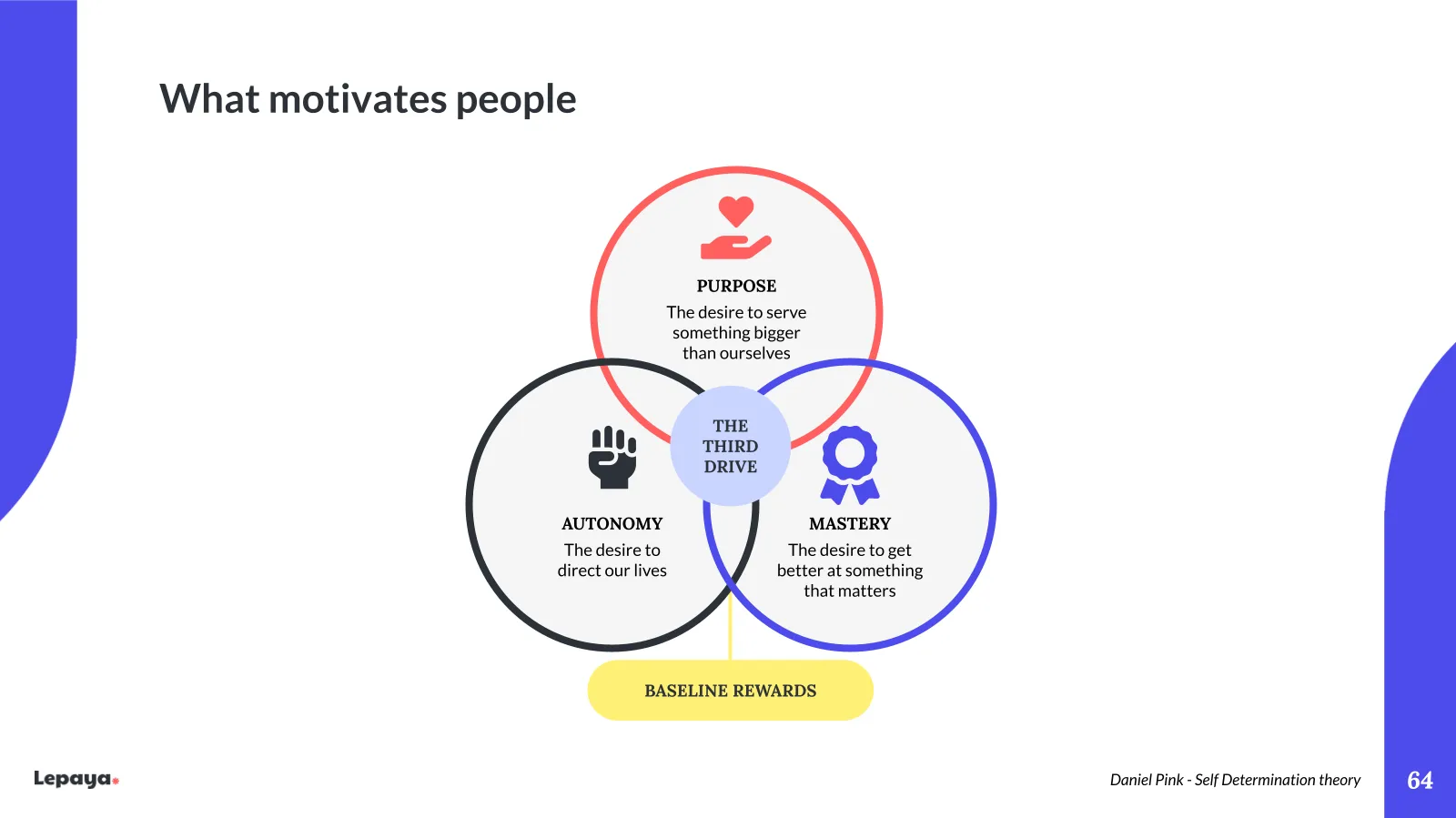
Mastery is one of our main drivers. The desire to get better at something that matters to us, motivates us to keep making progress and continue to do better when we believe in something.
“Psychological safety is a belief that one will not be punished or humiliated for speaking up with ideas, questions, concerns or mistakes.” Amy Edmonson (2)
When we feel safe, we feel safe enough to be the best version of ourselves. We become happy and as an outcome do well in all our other aspects of life. Indicative of this, is a research done by Google in 2016. When 180 Google teams conducted 200-plus interviews, and analyzed over 250 different team attributes. Psychological Safety was the nr 1. Predictor of team success. (3)
When employees learn to go from ‘failure is the limit of abilities’ to ‘failure is an opportunity to grow’, they will go farther. But in order to embrace the idea of ‘failure is an opportunity’ they will need to cultivate a growth mindset.
Instead of approaching work with a fixed mindset and the belief that your abilities are set in stone. For instance having the belief that nothing can be done to improve what one can achieve and believing that traits (and therefore typically capabilities) are static for life. The people with growth mindsets will view setbacks or challenges as a stimulating and motivational factor that will push them to work harder.
A growth mindset will play into our psychological motivator: mastery. Because those with a growth mindset believe that skills, knowledge, and abilities can be continuously improved upon. It is only a matter of time with the right amount of coaching, effort and direction that they will accomplish something. The main focus lies on ‘’getting better’’. They feel a psychological safety to fail and do better, and in the process make a lot of progress.

What engages people: autonomy
When employees feel uncertain in a role, or environment they tend to disengage. In order to get back on track, and to feel safe they need leadership that operates from trust instead of mistrust and promotes autonomy in the employee. When leaders are focused on empowering employees in becoming the best versions of their professional selves, organizations will see an increase in productivity, energy and engagement as well as a decrease in work related stress. (4)
A growth culture
When we talk about an environment that stimulates psychological safety for employees, we are talking about intentional culture. A culture that is cultivated carefully by an organization, with the intention of creating an environment for employees that stimulates growth.
Feedback is a very integral part of this intentional culture. Because feedback makes for an environment that stimulates psychological safety.
Why? Because feedback strengthens self esteem. When employees feel comfortable admitting mistakes, they can learn from them. Teams will more likely openly share ideas and test them out. Resulting in better innovation and decision-making. This makes sense, because when employees already have a fixed mindset, assumptions of ideas not working out, they will not try and neither fail nor succeed. Nothing will happen.
Learning starts with insights, by doing and testing. And how do employees get those insights on ambition, reputation and identity? By researching, testing each other and asking feedback.
Feedback is the key
Feedback serves as a guide to help people understand what they and others think of their performance. It has strong links to employee productivity and satisfaction and can be highly energizing and motivating. But when they receive little or no feedback, employees tend to be self-critical or self-congratulatory because they start to rely upon events instead of specific feedback when perceiving their impact and performance. Playing into a fixed mindset.
Feedback can either negate or validate how we perceive ourselves. When it comes to feedback that is in direct opposition to our self-perception, it can trigger our brain to send us into high alert mode. There is an interplay between what we are told and what we think it’s true, so our minds start grappling with the discrepancies.
Seeking external input is necessary if you want to adjust your self-perception. If we want this to work effectively without triggering our ‘defense-mode’, the SCARF model and neuroleadership institute provide us with some valuable insights. (5, 6)
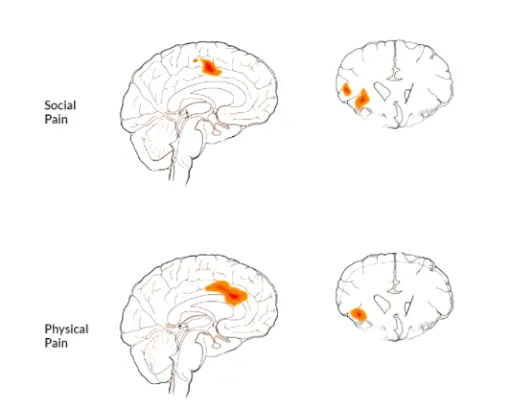
Unsolicited feedback provides us with the same feelings of threat as someone posing a physical threat nearby. It lights up the same pain part in our brains, causing cognitive dissonance. Which literally means we disconnect and do not process the feedback that is given on a deeper level. Instead we fight, we argue, or we flee, we turn silent and/or walk away. This can be turned around by focussing your feedback culture initiatives on feedback asking instead of feedback giving.
By focusing on the feedback asker, we tackle the principles of the SCARF model quite well. When the feedback process is initiated by the feedback asker, the feedback asker and giver both remain equal in status, whereas unsolicited feedback puts the feedback receiver in a lower position. When feedback is asked, they remain autonomous and create a feeling of certainty. They are in the lead and show willingness to learn and actively practice the Growth Mindset. Which means less loss of face if the feedback contains improvement points. By actively asking the feedback giver for help, they feel responsible to provide meaningful and fair input, in contrast to the feedback giver reaching a high threshold of frustration and providing poorly chosen feedback as a result. This responsibility creates both fairness and enhances psychological safety and relatedness.
We excel only when people who know us and care about us tell us what they experience and what they feel, and in particular when they see something within us that really works. (7)
Feedback is an essential part of our development, both professional and personal. It helps employees reach their full potential, raise awareness of areas for improvement, and shows strengths and weaknesses. Without feedback from others, it’s difficult for both leaders and employees to be self-aware and enrich their self-knowledge.
Where do organizations start with organizing their feedback flow?
Within changing organizational structures a growth mindset can be stimulated. Stanford Psychology professor Carol Dweck points out that although mindsets can be reasonably stable, it is a combination of beliefs and beliefs that can change. What takes more work is developing the skill Resilience. Resilience can play into fixed qualities, that some have and others do not. But can definitely be developed over time. (8)
It’s all about training the right skills so people can adjust behavior. And a flexible stance towards change is only possible when the context stimulates safety. Is there space to make mistakes? Is there inspirational leadership? Is there trust in the organization? A culture should play into both mastery, are people stimulated to fail and do better, and autonomy, do the leaders create leaders, in order to motivate and engage employees.
Within the right culture, feedback can and will make a big impact.
“Feedback, skillfully delivered, can be a tool to help people identify their blind spots and opportunities for growth. But only when it’s embedded in a true process of growth and development.” (9)
In order to organize your feedback so you get and give the most honest opinions, there are certain guidelines to follow:
- Make them feel comfortable. Your feedback can ultimately be unproductive if the employee receiving it doesn’t feel comfortable. Aim to create stronger relationships with your employees or colleagues that allow you to say anything to each other. You are a leader, but also a human being. This will create opportunities to build skills and confidence.
- Be specific. People respond better to specific directions. Don’t provide generalized and ambiguous feedback but say positive and specific pointed things. For example, instead of saying “You need to talk more in meetings,” say “I like how you think. I’d like to hear more opinions from you in every meeting we’re in together.”
- Be positive. Positive feedback is known to stimulate the reward centers in the brain. It leaves us open to taking a different direction. Negative feedback indicates turns on the threat response, so the recipient goes into defensive mode. Don’t avoid negative feedback but follow it with a possible solution. Be an ally not a critic. Provide at least as much positive feedback as you do negative.
- Be immediate and tough. If you want the feedback to be productive, give it frequently and don’t wait. Also, don’t be mean by saying how stupid someone’s actions were (even if they were), but start by asking their perspective on the situation.
- Use technology. HR instruments, such as surveys and interviews, can be supplemented with some technological help. You can use it to gather data, employ professional help to analyze and assess it, share it with your manager or get coaching.
- Focus on feedback asking insteads of giving. Tackle the SCARF indicators and turn feedback into something that provides equal status, provides certainty and autonomy, a feeling of relatedness and fairness by focusing on the feedback asker as the initiator of feedback processes.
Want to gain insights into your teams and gather feedback?
Start with the Team Scan.
Sources
1. https://www.bbc.com/worklife/article/20210629-the-great-resignation-how-employers-drove-workers-to-quit
2. https://www.range.co/blog/introduction-to-psychological-safety#:~:text=According%20to%20Dr.,questions%3B%20this%20is%20human%20behavior.
3. https://www.nytimes.com/2016/02/28/magazine/what-google-learned-from-its-quest-to-build-the-perfect-team.html
4. J. Paul Zak, The Neuroscience of Trust (Harvard Business Review, 2017)
5. Rock, D. (2008). SCARF: A brain-based model for collaborating with and influencing others. Neuroleadership Journal, 1, 1–9.
6. Rock, D. (2008). SCARF: A brain-based model for collaborating with and influencing others. Neuroleadership Journal, 1, p1.
7. https://hbr.org/2019/03/the-feedback-fallacy
8. https://journals.sagepub.com/doi/10.1177/1745691618804166
9. https://hbr.org/2021/12/feedback-isnt-enough-to-help-your-employees-grow

We offer a scalable employee training solution. It lets you continuously upskill your people.
Book a call

Related articles



Review by:
Jeroen Kraaijenbrink: How organizations can overcome the honesty gap
Senior leadership and boardroom teams invest heavily in commercial strategies to win market shares. Yet the most important and honest information driving strategy circulates in teams underneath, never making it to the table where decisions are made.Jeroen Kraaijenbrink, Executive Coach and Strategy Consultant at Kraaijenbrink Advisory, has spent years working on what he calls the honesty gap. We sat down with him to understand what the honesty gap actually is, where it lives in organizations, and why fixing it requires a leadership shift.How do you define the honesty gap?There's a narrow definition and a broad one. The broad one is: we have created organizations and systems where it's barely possible to be honest to yourself, about yourself, and honest to other people.Honesty isn't just lying. It's integrity, being authentically connected to other people and being aware of your own emotions and your own biases.The honesty gap, in a narrow sense, is the fact that truth and information don’t travel vertically upwards in a company. It's often hard to speak openly to your manager because it’s become rational not to. Many people have the experience: 'I've tried it once but then I was punished for it, or was ignored, so let it be, never mind.' That's the fascinating part: it's not good for people, it's not good for organizations and yet we somehow keep this system intact.Is it less about individual dishonesty and more about a collective culture?A lot of the most important information going through your company is between people and in conversations. You need to find a way to have an honest conversation, where the things that matter get on the meeting table, not just in the informal circuit. And I think that's pretty rare.A more systematic definition is that we're not using the collective intelligence of a company enough. We can radically improve it because we’ve made it rational to hide the truth and to keep things to yourself. A lot of it may not be intentional, but the very fact that someone is in a position above you automatically creates this tension: 'What do I show? What don't I show? Because my next performance appraisal is coming up.'Where does the honesty gap typically show up first, and who owns the problem?It starts with leaders. Solving it needs one leader at the top, the CEO at least, being open and reflective enough to admit that there is an honesty gap and that they are part of it. That's the self-reflection you need for any improvement and any change. Like in coaching: you need to be aware that there is stuff to improve. You don't need to be a perfect leader, but you need to be open enough to admit that there is an issue.You talk about the 'persona trap', what is that?You're stuck in a persona where you perform in a certain way within your company. You have a role, a position, a reputation, and that locks you into specific behaviors. The worse the match between who you are as a person and how you need to show up in your organization, the more inner conflict that’s created. Especially at the top, it’s a problem for many executives. They're supposed to be the people who know it all and be decisive. While if you're honest, you don't necessarily know everything, you’re uncertain and have anxieties.The inner core of the honesty gap is breaking the performance, breaking the acting you feel you must do. If you've put yourself in a role of being the strong, decisive, number-oriented leader, that's how you have to behave. But most people don't feel very comfortable in that kind of role because it's not who they are.Can you fix the honesty gap through individual coaching alone or does the system have to change?Part of it is a personal change, part of it is a system change. You can be on your own and be very authentic, but if the system doesn't change at all, you’ll struggle to break the honesty gap.What you need to do is work on the people, the culture, and the system. Ideally that has to include the top, because otherwise it stays at the level of the person being coached. If it's a team lead or a mid-manager, that person can partly create an island in the organization, a safe space for their team and their department. But still, the appraisal systems, objectives, and culture are company-wide. Why is this so hard to shift, even when leaders recognize the problem?We have normalized this idea that you have to be strategic in what you tell and what you show. You have to show up in a certain role at work. It's also the result of how we have separated work from life, which is a very unnatural thing. It's from the industrial age, because for any other species, work is life. But now there’s a split between work, with all the routines in companies, and then your private life. There's just one you, you're the same person at home as you are at work. The good news is that the honesty gap can be closed. While many companies have unintentionally created environments where people hesitate to speak openly, organizations prioritizing trust, authenticity, and psychological safety can unlock a competitive advantage. When employees feel safe to share concerns, ideas, and perspectives, collective intelligence grows, decision-making improves, and stronger relationships emerge across every level of the business.
Ready to drive impact together?
Close skill gaps, accelerate growth, and future-proof your workforce.